Creating Digital Museums
of the Future
India's Leading Turnkey Museum & Immersive Experience Design Company
India's Most Experienced Immersive Museum Experience Company
Over more than two decades, Fusion VR has grown into India's most experienced turnkey immersive technology company — designing, building and commissioning digital museums, experience centres, 7DX theatres, AR/VR simulators and heritage interpretation experiences for government institutions, cultural trusts, defence organisations, and tourism bodies across India.
Every project — from the first conceptual sketch to the final day of commissioning — is executed entirely by our in-house team of archaeologists, historians, creative directors, 3D artists, VR/AR engineers and project managers.











Our Turnkey Digital Museum &
Immersive Solutions

Cultural & Heritage Experience Centers
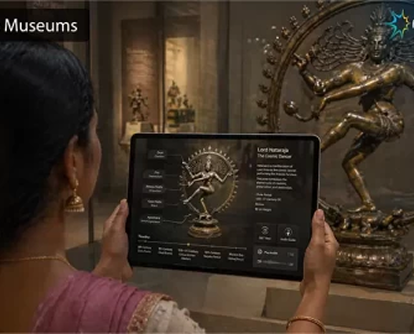
Fully immersive digital museum experiences — from interactive exhibits and holographic depictions to 7DX theatres and AR/VR storytelling zones.

Digital Art & Interactive Galleries
Turnkey sound and light productions combining spatial audio, dynamic lighting choreography and projection into theatrical experiences.

Immersive Theatres & 7DX Arenas
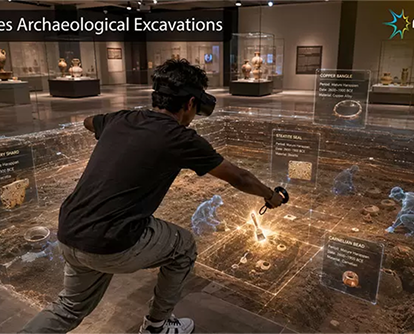
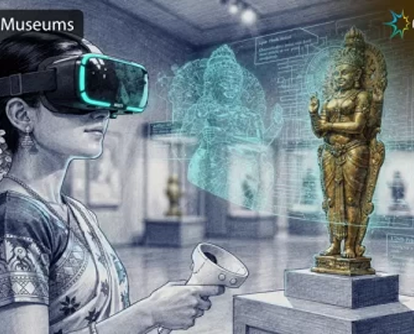
VR, AR and MR exhibits that transport visitors across time, geography and scale, inside a single heritage museum hall.

DPR & PMC Advisory Services
In-house 7DX theatre technology combining stereoscopic 3D projection, motion seating, spatial surround sound and multisensory effects.

Monument & Site Projection Mapping
Large-format 3D projection mapping shows that transform walls, monuments and architectural surfaces into storytelling canvases.

Institutional Experience Hubs
From DPR and concept design through content, hardware, installation, calibration, training and AMC — handled end to end.
Case Studies
From political memorials and cultural heritage centres to defence pavilions and spiritual
experiences — our projects speak for themselves.
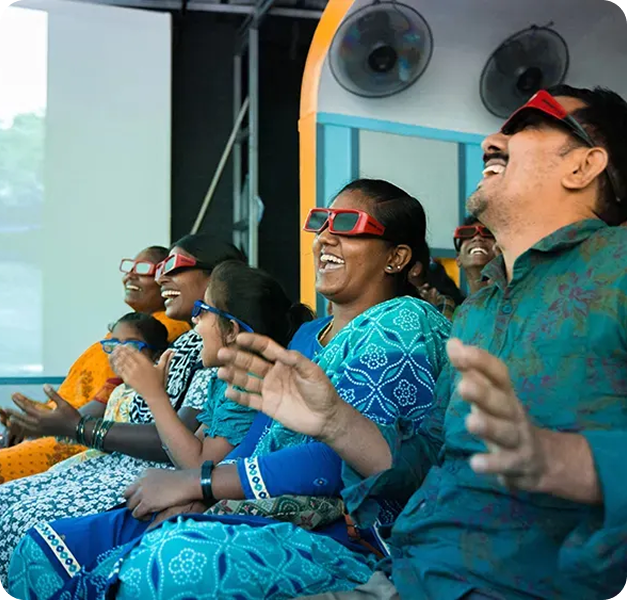
Kalaignar Memorial – Digital Museum
A tribute to Thiru M. Karunanidhi, opened February 2024 — an immersive journey into his life and legacy across five themed zones.
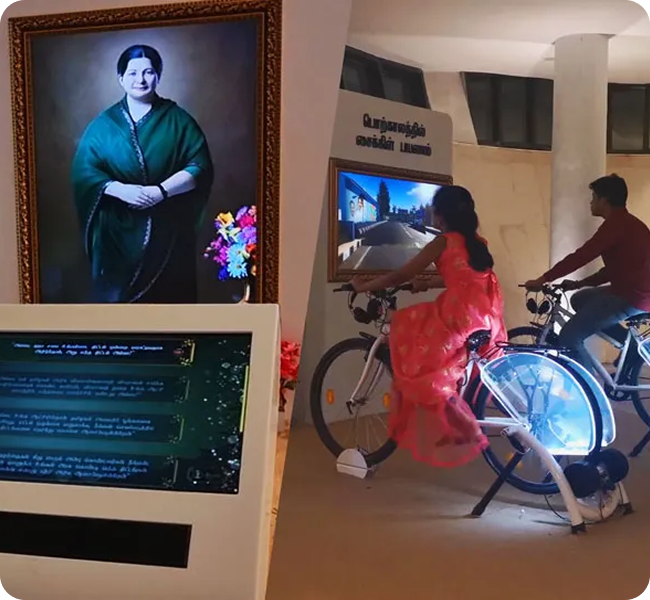
Amma Museum & Knowledge Park
Bringing Dr. J. Jayalalithaa's life story and contributions to the people of Tamil Nadu to vivid, interactive life.
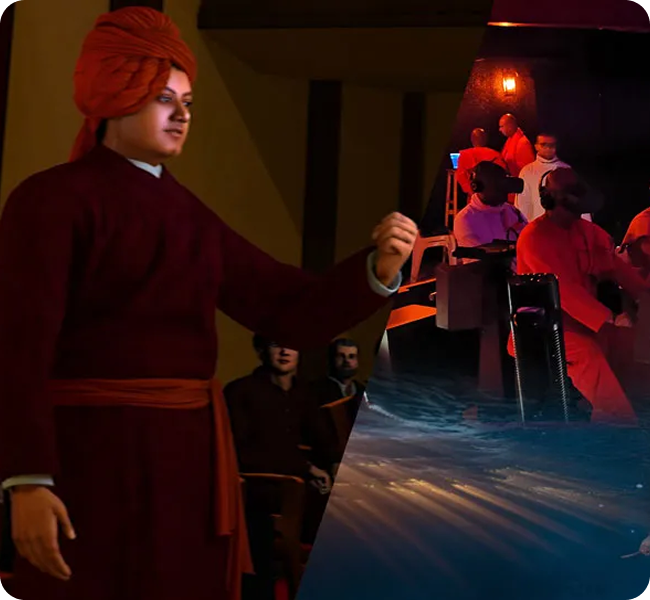
Experience Vivekananda
A 3D stereoscopic experience bringing Swami Vivekananda's historic Chicago speech to life across RKM museums.
Our end-to-end approach
Five stages from concept to opening day. Each step builds on the last, moving steadily
toward a finished space that works.
What Our Partners Say
Trusted by Government, Industry & Cultural Establishments
The VR and AR experience installed in the permanent Vivekananda Exhibition at our premises were the creations of team of experts from Fusion VR. Dr. Bharathy is extremely creative, capable, committed, very trustworthy and has been rendering quality service to us for nearly a decade.
Swami Shantatmananda
Secretary, Ramakrishna Mission, Delhi
The VR and AR experience installed in the permanent Vivekananda Exhibition at our premises were the creations of team of experts from Fusion VR. Dr. Bharathy is extremely creative, capable, committed, very trustworthy and has been rendering quality service to us for nearly a decade.
Swami Shantatmananda
Secretary, Ramakrishna Mission, Delhi
The VR and AR experience installed in the permanent Vivekananda Exhibition at our premises were the creations of team of experts from Fusion VR. Dr. Bharathy is extremely creative, capable, committed, very trustworthy and has been rendering quality service to us for nearly a decade.
Swami Shantatmananda
Secretary, Ramakrishna Mission, Delhi
The VR and AR experience installed in the permanent Vivekananda Exhibition at our premises were the creations of team of experts from Fusion VR. Dr. Bharathy is extremely creative, capable, committed, very trustworthy and has been rendering quality service to us for nearly a decade.
Swami Shantatmananda
Secretary, Ramakrishna Mission, Delhi
The VR and AR experience installed in the permanent Vivekananda Exhibition at our premises were the creations of team of experts from Fusion VR. Dr. Bharathy is extremely creative, capable, committed, very trustworthy and has been rendering quality service to us for nearly a decade.
Swami Shantatmananda
Secretary, Ramakrishna Mission, Delhi
The VR and AR experience installed in the permanent Vivekananda Exhibition at our premises were the creations of team of experts from Fusion VR. Dr. Bharathy is extremely creative, capable, committed, very trustworthy and has been rendering quality service to us for nearly a decade.
Swami Shantatmananda
Secretary, Ramakrishna Mission, Delhi
The VR and AR experience installed in the permanent Vivekananda Exhibition at our premises were the creations of team of experts from Fusion VR. Dr. Bharathy is extremely creative, capable, committed, very trustworthy and has been rendering quality service to us for nearly a decade.
Swami Shantatmananda
Secretary, Ramakrishna Mission, Delhi
Questions we hear often.
Everything you need to know. Can't find an answer?
Chat to our Team More QuestionsWhat is a Digital Museum?
−A Digital Museum in India is a physical museum space that uses immersive technology to transform static exhibits into engaging, multi-sensory visitor experiences. Technologies such as stereoscopic 3D projection, virtual reality, augmented reality, holographic displays, and 3D spatial audio replace traditional glass-case displays — inviting visitors to step inside history, culture, or science through sight, sound, motion, and sensation. Across India, Digital Museums are being adopted by government bodies, heritage trusts, religious institutions, and science centres to modernise visitor engagement and preserve cultural legacy.
Fusion VR's Odyssey of Hanuman 7DX — developed for IITM Pravartak and the Department of Science and Technology, Government of India, and installed in Ayodhya — is one example: a 100-foot curved screen experience with 28K stereoscopic 3D projection, Holophonix spatial audio from France, and 7DX hydraulic motion, delivering several India-first achievements built by a team with more than two decades of experience.
What is Museum 2.0 and how is it different from a traditional museum?
+Museum 2.0 is a philosophy as much as a technology — it reimagines the museum visitor's role from passive observer to active, two-way participant. In a traditional museum, the institution decides what to show and the visitor simply receives it, walking past artefacts behind glass and reading labels. Museum 2.0 breaks this one-way relationship — visitors interact with exhibits, make choices, trigger responses, and shape their own experience in real time through touch, motion, voice, and gesture. The enabling technologies range from touch kiosks and interactive displays, to interactive conversational AI avatars, to fully multisensory immersive environments — all designed to put the visitor in control. The result is a modern museum experience with dramatically higher engagement, longer dwell time, and deeper emotional connection.
Fusion VR has delivered Museum 2.0 experiences across India including the Amma Memorial Museum & Knowledge Park, the Kalaignar Memorial Museum at Marina Beach, the Tamil Nadu Policy & Governance Experiential Centre (TNPAGE), and the Porunai Museum for the Tamil Nadu Archaeology Department.
What is the difference between a Digital Museum and Museum 2.0?
+The difference between a Digital Museum and Museum 2.0 lies not just in technology but in philosophy. A Digital Museum is the broad category — any physical museum that uses digital technology to present content. Museum 2.0 is a higher standard within that category, defined by a fundamental shift from one-way display to two-way visitor participation.
| Digital Museum | Museum 2.0 | |
|---|---|---|
| Definition | Any museum using digital technology | Philosophy of two-way visitor participation |
| Visitor Role | Can remain a passive observer | Always an active participant |
| Interaction Level | Optional – can be minimal | Central to every experience |
| Technology Depth | Can be basic – screens, kiosks | Multi-technology, multisensory environments |
| Standard | Broad category | Higher standard within the category |
| Example | Gallery with digital video screens | Gallery with AI avatars, touch exhibits, immersive zones |
What is an Immersive Museum and how is it different from a Digital Museum?
+An Immersive Museum is a physical museum where the visitor is fully surrounded by the experience — through large-format projection, spatial audio, motion, and multisensory effects that make them feel present inside the story rather than observing it from outside. While a Digital Museum is the broad category of any museum using digital technology, an Immersive Museum specifically emphasises deep sensory immersion as its defining quality — the goal is total presence, where sight, sound, motion, and even touch combine to transport the visitor to another time or place.
Every Immersive Museum is a Digital Museum, distinguished by its emphasis on total sensory presence. Fusion VR's immersive experiences include Tears of Vivekananda, a multisensory VR experience created for the Ramakrishna Mission in Delhi and Chennai, and Tales of Ajanta, a multisensory VR experience, along with the Odyssey of Hanuman 7DX project at Ayodhya — both developed for IITM Pravartak and the Department of Science and Technology, Government of India.
| Digital Museum | Immersive Museum | |
|---|---|---|
| Focus | Use of digital technology | Depth of sensory immersion |
| Visitor Feeling | Engaged and informed | Fully transported and present |
| Typical Technology | Screens, kiosks, interactive displays | Large-format 3D projection, VR-HMD, spatial audio, motion, multisensory effects |
| Scale of Experience | Can be exhibit-by-exhibit | Often a complete enveloping environment |
| Relationship | The broad category | A specialised type of Digital Museum |
What does an immersive museum experience actually feel like for a visitor?
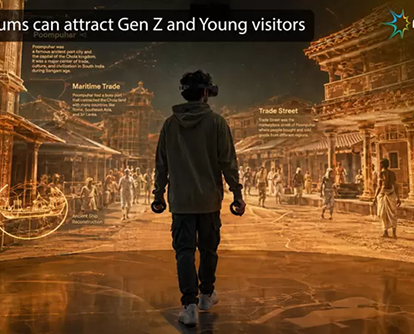
+Walking into an immersive museum feels less like visiting an exhibition and more like stepping into another world. Instead of standing before glass cases, you are surrounded — a vast screen curves around you, imagery moves in three dimensions, sound travels through the space so a voice or a river or a battle seems to come from a specific direction, and in motion-based experiences the floor or seat moves in sync with what you see. The everyday sense of being in a room fades, and for a few minutes you genuinely feel present in another time or place. Visitors often describe a moment where they forget they are watching a screen at all. In Fusion VR's 7DX VR Boat Ride at the Porunai Museum, for example, visitors feel as though they are physically travelling down an ancient Tamil river — the motion, the spatial sound, and the multisensory effects combining to create the sensation of real time travel into history.
What is a Virtual Museum — and is it the same as a Digital Museum?
+What is an Experience Centre?
+What is the difference between a Digital Museum, Museum 2.0, Immersive Museum, Virtual Museum, and Experience Centre?
+Why are digital museums becoming important for heritage and culture in India?
+What types of institutions benefit most from a Digital Museum?
+What is digital heritage preservation and how does technology support it?
+What is immersive storytelling in museums and how does it engage visitors?
+What technologies are used in a modern Digital Museum?
+What is immersive theatre and how does it work inside a museum?
+What are interior and exterior 3D Projection mapping, and how are they used in museums and heritage spaces?
+What is stereoscopic 3D projection (S3D) and why does it matter for museum experiences?
+What is a 7DX experience and how is it different from 3D, 4D, 5D or 7D?
+What is spatial audio, how is it different from surround sound like 5.1 or 7.1, and what role does it play in immersive museum experiences?
+Ready to Build Something Remarkable?
Tell us about your project. Museum, theatre, experience centre, or anything it can be.
- In-house design, engineering and content production
- 20+ years, 65+ experiences delivered nationwide
- End-to-end: concept, build, install, train and maintain


Contributions in Shaping Modern India — How Fusion VR is Rewriting Heritage.

Why VR, AR & MR adoption is so crucial for smart manufacturing.

The Science of Spatial Learning Inside Virtual Reality.

Industrial VR & AR Demystified — A Practical Guide.